Antoni Gaudí was a visionary Catalan architect known for his unique, organic, and highly individualized designs that drew inspiration from nature's geometric shapes and structural logic.
His legacy of organic architecture serves as the direct creative spark for Gaudí Villas. By breaking away from typical box-like structures, this project incorporates natural flowing lines and hand-sculpted curves into a modern coastal setting.
Read the Dezeen EditorialThe Basílica de la Sagrada Família in Barcelona, Antoni Gaudí’s most famous work.
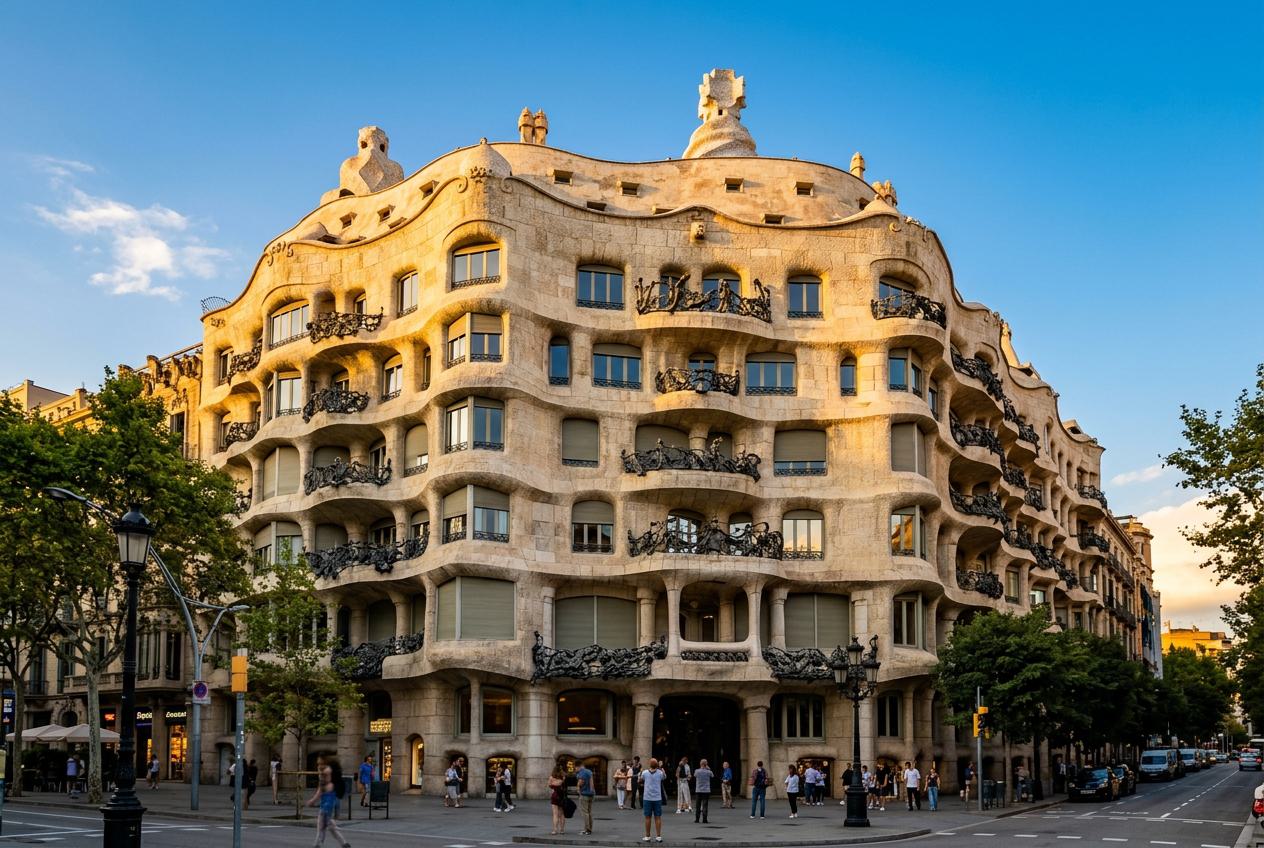
Casa Milà (La Pedrera) in Barcelona, showcasing Gaudí's iconic undulating stone facade.
Casa Milà is one of Antoni Gaudí’s most famous residential designs, renowned for its undulating limestone facade and complete lack of straight lines.
The building's organic curves, sculptural balconies, and flowing stone walls mimic natural geological formations. This masterwork proves how vertical architecture can break free from linear constraints to feel alive and moving.
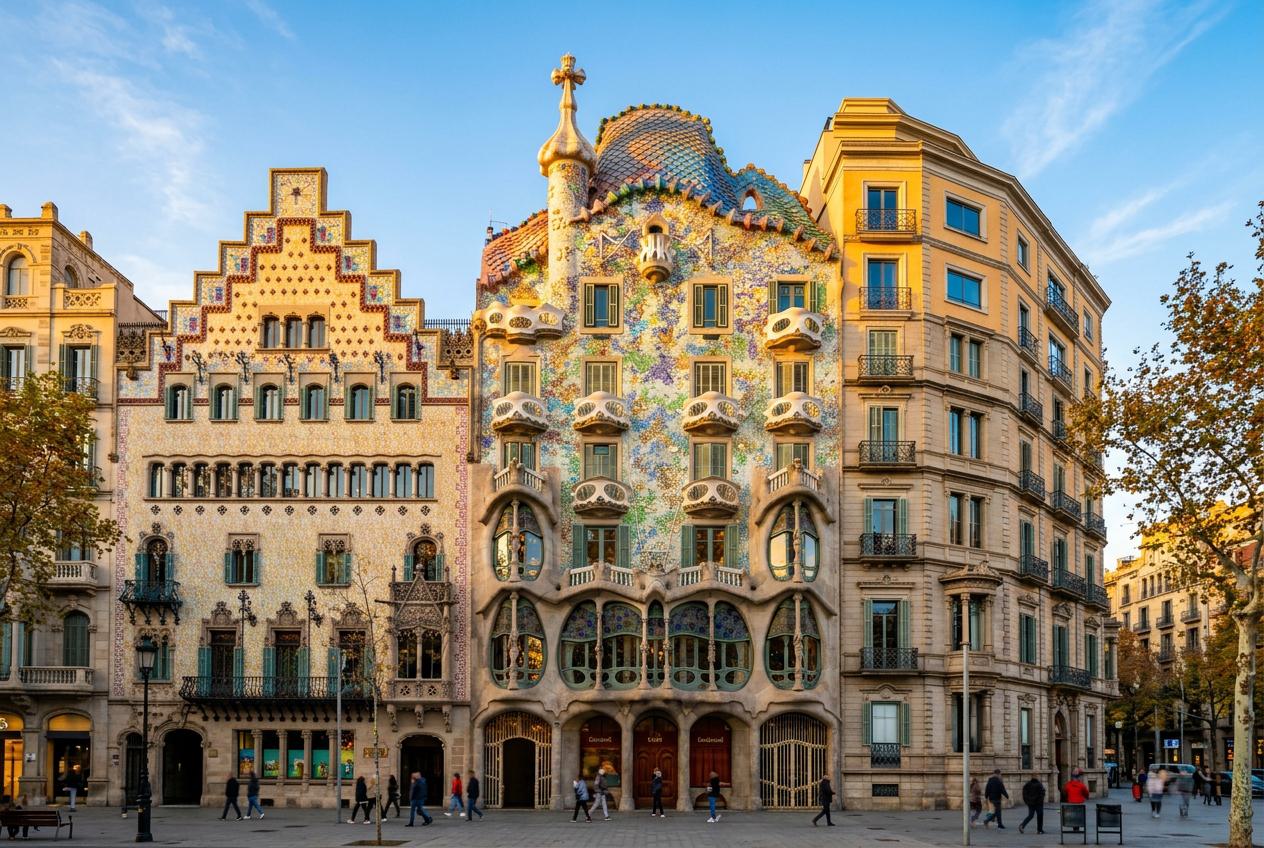
Casa Batlló is one of Gaudí's most fantastical residential facades, famous for its skeletal stone columns, colorful trencadís mosaic tiles, and arched roof resembling a dragon's spine.
The building completely avoids straight lines, using sculpted organic balconies and flowing window frames that look like living bone structures. It illustrates Gaudí's use of rich textures, light, and natural forms to turn a traditional facade into a three-dimensional sculpture.
The colorful, organic facade of Casa Batlló in Barcelona.